Please Choose Your Language


Please Choose Your Language
Views: 0 Author: Site Editor Publish Time: 2026-09-08 Origin: Site


Marine diesel engine downtime caused by incorrect or incompatible turbocharger components hits your operational budget hard. When a vessel loses scavenging air pressure mid-voyage, you face immediate delays, spiked fuel consumption, and severe engine damage. Marine procurement is notoriously complex. Superseded part numbers, varying engine duty cycles, and undocumented aftermarket modifications routinely cause fitment failures. You cannot order replacement components based on visual similarity or incomplete data. Doing so guarantees catastrophic engine failure. Securing the right components demands a systematic, engineering-first framework. You must verify nameplate data, component specifications, and supplier compliance before issuing any purchase order. Relying on generic specifications or automotive sizing logic fails in heavy-duty marine environments. A rigorous verification process ensures every replacement part restores baseline performance, maintains emissions compliance, and withstands the extreme thermal and mechanical stresses of continuous heavy fuel oil operation.
Data Verification is Non-Negotiable: Exact turbocharger model, serial number, and engine specification data must dictate procurement, not generic horsepower or displacement estimates.
Component-Specific Tolerances Matter: High-stress components like turbocharger bearing parts require strict adherence to OEM clearances and lubrication specifications to prevent premature failure.
Strategic Kit Utilization: Opting for a comprehensive turbocharger service kit during scheduled overhauls often mitigates the risk of mismatched wear patterns compared to piecemeal part replacement.
Compliance and Traceability: Reliable procurement requires verifiable documentation, including classification society approvals (e.g., DNV, ABS, Lloyd's Register) and strict material traceability.
Mismatched parts directly cause severe failure modes within marine diesel engines. When procurement teams order incorrect components, physical symptoms manifest rapidly in the engine room. Installing bearings with improper clearances restricts the oil supply. This restriction generates excessive heat, accelerating wear on the rotor shaft. Incompatible filtration components result in blocked oil filters and dangerously low lubricating oil pressure. Without adequate lubrication, the rotating assembly experiences excessive rotor vibration. This vibration can shatter compressor wheels and destroy the bearing housing entirely.
Marine environments impose unique thermal and mechanical stresses. Standard industrial components cannot survive here. Commercial vessels operate continuously on heavy fuel oil (HFO). This fuel generates exceptionally high exhaust temperatures and corrosive byproducts. Marine Turbocharger Parts are engineered with specific metallurgy to resist thermal fatigue and chemical attack under these exact conditions. Automotive or light-industrial grade parts lack the mass, material composition, and dimensional stability required for marine duty cycles. They warp, crack, or melt when subjected to the sustained thermal load of a two-stroke or four-stroke marine diesel engine.
The hidden costs of ordering incorrect parts extend far beyond the initial invoice. A mismatched nozzle ring or turbine blade profile immediately degrades engine efficiency. You will see higher fuel consumption and elevated exhaust gas temperatures. When incorrect parts fail, vessels face delayed departures and off-hire penalties. Engineering crews must repeat the labor-intensive process of dismantling the turbocharger, cleaning the air coolers, and inspecting the engine block for secondary damage. In severe cases, fragments from a failed compressor wheel get ingested into the cylinders, requiring a complete engine overhaul.
Observed Symptom | Likely Mismatched Component | Operational Consequence |
|---|---|---|
Excessive Rotor Vibration | Incorrect journal bearing clearance | Rotor shaft scoring, bearing housing destruction |
High Exhaust Gas Temperature (EGT) | Mismatched nozzle ring area | Thermal fatigue on exhaust valves, reduced engine efficiency |
Compressor Surge (Barking Noise) | Wrong compressor wheel trim | Reversed airflow, severe thrust bearing overload |
Oil Leakage into Compressor | Improper sealing ring dimensions | Fouled charge air coolers, increased fire risk |
The serial number (S/N) serves as the primary identifier for any turbocharger repair. This unique string of characters allows suppliers to track the specific factory build sheet. Manufacturers frequently update internal components during a production run. Two turbochargers of the exact same model may contain different internal hardware. The serial number identifies factory modifications, superseded part numbers, and custom aerodynamic trims installed before the unit left the assembly line.
Type and model designations provide the structural framework for procurement. This nomenclature indicates the frame size, generation, and application codes. Understanding these designations helps engineers determine the physical footprint of the unit and the general family of replacement parts required. The model number alone is never sufficient for ordering internal rotating components.
The specification number (Spec No.) dictates the precise aerodynamic trim of the compressor and turbine wheels. This number defines blade angles, inducer diameters, and exducer dimensions. Ordering parts without verifying the specification number results in receiving a compressor wheel designed for a different engine rating. This mismatch causes compressor surge or inadequate scavenging air pressure during operation.
Verifying the exact marine diesel engine pairing is mandatory. Turbocharger manufacturers produce identical frame sizes customized for different engine builders. A specific turbocharger model mounted on a Wärtsilä engine features different internal clearances and nozzle ring geometries than the exact same model mounted on a MAN B&W engine. Procurement must cross-reference the engine make, model, and continuous service rating (CSR) to ensure compatibility.
Marine procurement strictly follows OEM specifications to restore baseline performance and maintain emissions compliance. Mechanics select automotive turbochargers based on generic horsepower or engine displacement targets. Marine engines require exact aerodynamic matching. Altering the airflow characteristics by installing incorrect parts pushes the engine out of its certified NOx emissions tier, resulting in severe regulatory fines.
Current operating symptoms provide necessary context for parts selection. Before placing an order, engineers must evaluate recent maintenance triggers. Unusual noise, excessive vibration, high exhaust temperatures, oil leakage, dirt buildup, and reduced scavenging air pressure indicate specific internal failures. Cross-referencing these symptoms ensures procurement orders all necessary supplementary parts, such as replacement oil slingers or gas inlet casings, rather than just addressing the most obvious damaged component.
Locate the physical data plate securely riveted to the compressor casing or bearing housing.
Wipe away accumulated grease and take a high-resolution photograph for procurement records.
Record the engine's continuous service rating (CSR) and maximum continuous rating (MCR) from the engine room logs.
Document any previous modification codes or overhaul stamps located near the serial number.
Measure current exhaust gas temperatures across all cylinders to establish a performance baseline before ordering parts.
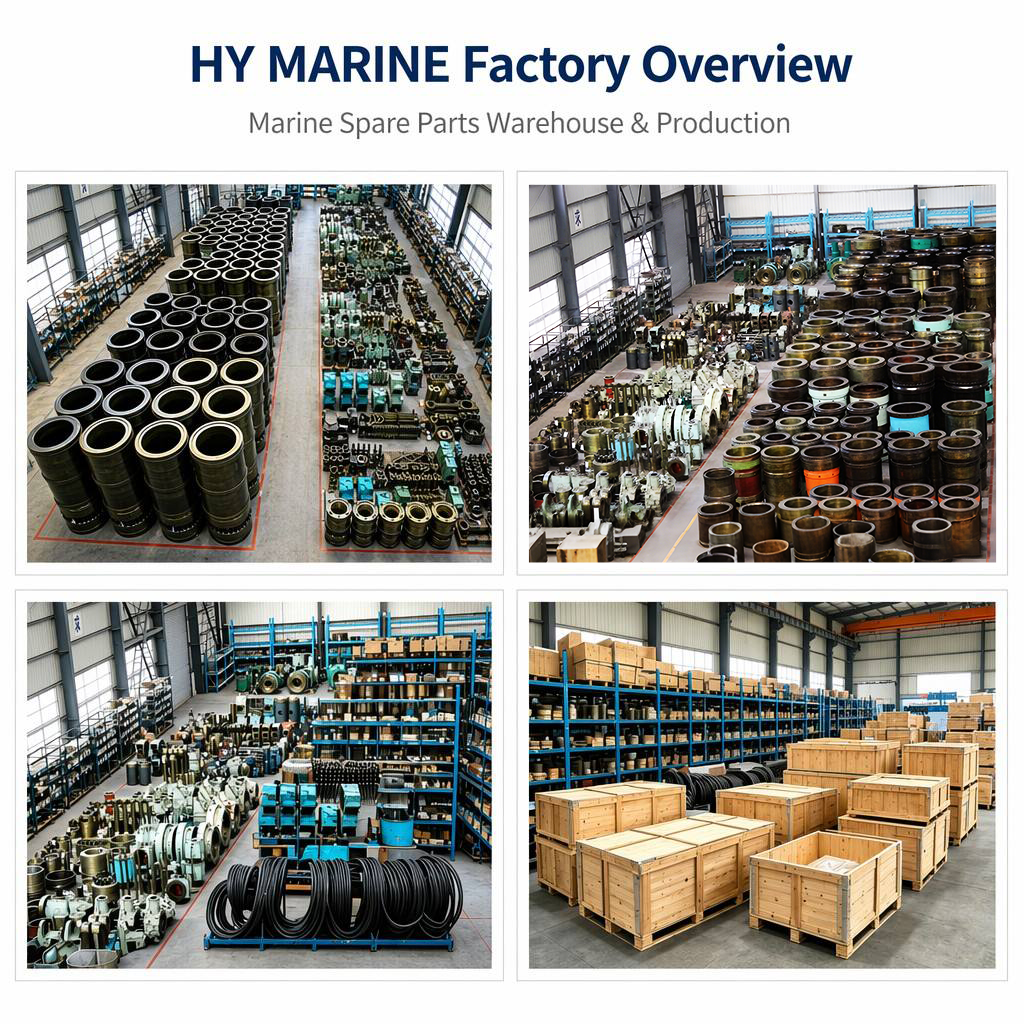
Radial and axial clearances dictate the operational lifespan of turbocharger bearing parts. Journal bearings support the radial load of the rotor. Thrust bearings manage the axial forces generated by exhaust gases and intake air. When selecting replacement bearings, engineers must verify that dimensions match the exact wear limits specified by the OEM. Installing bearings with excessive clearance causes rotor instability. Insufficient clearance leads to immediate oil starvation and seizure.
Material specifications for bearing housings and internal components must withstand extreme temperature gradients. Marine turbochargers operate at tens of thousands of revolutions per minute while exposed to exhaust gases exceeding 500°C. The metallurgy must resist oil coking. Coking occurs when lubricating oil breaks down into hard carbon deposits due to excessive heat. High-quality bearing components utilize specialized alloys that maintain dimensional stability and facilitate rapid heat transfer.
Replacing bearings requires the simultaneous replacement of associated hardware. Sealing rings, oil slingers, and high-tensile fasteners degrade at the same rate as the bearings themselves. Reusing old sealing rings with new bearings compromises the lubrication system. This allows exhaust gases to pressurize the oil drain or permits oil to leak into the compressor casing. Procurement must ensure all peripheral hardware is included in the order.
Rotating assemblies demand precision dynamic balancing. Microscopic weight imbalances generate destructive centrifugal forces at high operating speeds. When ordering rotors, compressor wheels, or turbine blades, procurement must verify balancing certificates from the supplier. The entire rotor assembly must be balanced across multiple planes to eliminate vibration that could destroy the bearing assembly and compromise the turbocharger casing.
Blade geometry and trim directly control engine breathing. Ordering the wrong turbine blade angle alters the exhaust gas flow velocity. An incorrect compressor wheel trim changes the volume and pressure of the intake air. These mismatches cause severe operational issues, including engine surging, where airflow reverses back through the compressor, or dangerously high exhaust gas temperatures that melt engine exhaust valves.
Existing casings require rigorous thermal fatigue inspection before deciding on a repair strategy. Engineers must assess gas inlet casings and turbine casings for cracks, erosion, and distortion caused by continuous exposure to corrosive exhaust gases. If the casing exhibits severe structural degradation, replacing internal rotating components will not restore the turbocharger to safe operating condition. The entire unit or the affected casing must be replaced.
Nozzle ring sizing determines the efficiency of the turbine. The nozzle ring directs exhaust gases onto the turbine blades at a specific angle and velocity. Exact matching of the nozzle ring area is mandatory to maintain optimal engine scavenging efficiency. Installing a nozzle ring with an incorrect flow area will either choke the engine at high loads or fail to spool the turbocharger adequately at low loads.
Component Category | Primary Inspection Metric | Replacement Trigger |
|---|---|---|
Journal Bearings | Radial clearance measurement | Clearance exceeds OEM maximum tolerance limit |
Compressor Wheel | Blade leading edge profile | Visible erosion, foreign object damage, or fatigue cracks |
Turbine Casings | Wall thickness and structural integrity | Deep thermal cracking or severe gas erosion |
Nozzle Ring | Vane trailing edge thickness | Burned vanes or distorted flow area dimensions |
Procuring ABB turbocharger parts requires a deep understanding of generational design differences. Legacy series, such as the VTR and VTC, utilize different bearing configurations and lubrication systems compared to modern series like the TPL, A100, and A200. Legacy units often feature external roller bearings with independent oil pumps. Modern units typically employ internal journal bearings lubricated directly by the engine's main oil system. Procurement data must explicitly state the generation to avoid receiving fundamentally incompatible hardware.
Handling superseded part numbers is a routine challenge with ABB equipment. Over decades of service, the factory frequently releases recommended upgrades to address known wear patterns or improve efficiency. When ordering parts for older models, suppliers may provide a superseded component that requires a corresponding adapter or modified installation procedure. Engineers must verify compatibility charts to ensure the upgraded part integrates seamlessly with the existing rotor and casing.
Identifying the correct series is the first step when ordering IHI turbocharger parts. Common marine applications utilize the RH, RU, and AT series. Each series is engineered for specific engine displacements and exhaust gas flow rates. The RH series is widely used in auxiliary engines and requires precise identification of the frame size and modification code to ensure correct fitment of the turbine rotor and nozzle ring.
IHI designs feature unique tolerance sensitivities that influence maintenance intervals and part ordering. Specific clearance checks on the thrust collar and journal bearings dictate whether an overhaul requires standard replacement parts or oversized components to compensate for housing wear. Procurement teams must coordinate with onboard engineers to obtain accurate micrometer readings before finalizing orders for IHI rotating assemblies.
Targeted repairs justify piecemeal ordering under specific circumstances. If a turbocharger suffers foreign object damage to the compressor wheel due to a failed air filter, but the bearings and turbine side remain well within operational tolerances, ordering a single compressor wheel and balancing the assembly makes sense. Isolated failures that occur shortly after a major overhaul do not always necessitate replacing the entire internal assembly.
Inventory management strategies also support ordering individual components. Vessels should maintain an onboard inventory of specific high-wear items and consumables. Stocking individual O-rings, gaskets, locking plates, and sealing rings allows shipboard engineers to perform routine inspections and minor interventions without waiting for shore-side procurement. This targeted inventory prevents minor leaks from escalating into major operational disruptions.
Standardized overhauls align perfectly with pre-packaged kits. Marine engine maintenance schedules dictate major turbocharger interventions at specific intervals, typically every 8,000 or 16,000 running hours. A comprehensive turbocharger service kit contains every bearing, seal, O-ring, and fastener required to complete these scheduled overhauls. This ensures no consumable is overlooked during the requisition process.
Replacing all wear components simultaneously ensures uniform wear pattern matching. Bearings, thrust collars, and sealing rings bed into each other during operation. Replacing a single journal bearing while leaving an older thrust bearing in place creates uneven load distribution across the rotor shaft. The engineering logic of a service kit guarantees that all contact surfaces begin their service life at zero hours, drastically reducing the risk of secondary failures caused by mismatched tolerances.
Kit procurement drives significant lifecycle cost efficiency and reduces logistical overhead. Sourcing dozens of individual line items requires extensive cross-referencing, multiple purchase orders, and increased freight handling. A complete service kit consolidates procurement into a single part number, minimizing administrative burden and ensuring the engineering crew has everything required to complete the overhaul within the allocated dry dock or port window.
Evaluating non-OEM suppliers requires a strict focus on manufacturing standards rather than marketing claims. High-quality aftermarket parts deliver excellent reliability, provided the manufacturer utilizes CNC machining, proper metallurgical analysis, and rigorous quality control. Procurement teams must demand evidence of ISO 9001 certification and request detailed manufacturing facility audits before approving a new supplier for rotating components.
Accurate fitment verification tools separate reliable suppliers from generic parts distributors. A qualified supplier utilizes comprehensive OEM cross-reference databases to guarantee fitment based on the turbocharger serial number and engine data. They proactively flag discrepancies between the requested part number and the vessel's original build sheet, ensuring clear fitment information is established prior to shipping.
Classification society approvals are mandatory for pressure-retaining and rotating parts. Suppliers must provide components that carry type-approval certificates from recognized bodies such as DNV, ABS, or Lloyd's Register. These certificates confirm that the parts have been independently tested and verified to withstand the operational stresses of marine environments, ensuring the vessel maintains its insurance coverage and class standing.
Strict traceability and clear warranty terms define a trustworthy transaction. The supplier must provide material test reports detailing the chemical composition of castings and dimensional inspection reports for machined tolerances. The warranty terms must explicitly cover marine duty cycles, protecting the operator against premature failures resulting from manufacturing defects rather than just offering a generic industrial warranty.
Photograph your turbocharger data plate immediately to capture the exact serial number, frame size, and specification codes.
Measure current bearing clearances and record exhaust gas temperatures to define the exact scope of your upcoming repair.
Request classification society type-approval certificates and material test reports from your supplier before issuing any purchase order.
Order a complete service kit if your turbocharger is within 1,000 hours of its major scheduled overhaul interval to ensure uniform wear matching.
A: A minor service kit includes consumable items like O-rings, gaskets, sealing rings, and lock washers required for routine inspections or cleaning. A major service kit contains all components for a complete overhaul, including journal bearings, thrust bearings, oil slingers, and fastening hardware necessary to rebuild the rotating assembly.
A: If the nameplate is missing, locate the engine's original technical file or the vessel's initial sea trial documentation. The engine builder's manual lists the original turbocharger specifications. Alternatively, stamped identification numbers on the main casings or the compressor wheel help a qualified supplier cross-reference the correct build sheet.
A: No. Industrial bearing parts lack the specific metallurgy and clearance tolerances required for marine applications. Marine engines operate continuously on heavy fuel oil, generating higher exhaust temperatures and corrosive environments. Industrial parts suffer rapid thermal degradation, leading to premature bearing failure and potential rotor seizure.
A: Excessive vibration usually indicates improper dynamic balancing of the rotor assembly, incorrect bearing clearances, or misalignment during installation. It can also result from foreign object damage to the compressor wheel or a bent rotor shaft. Immediate shutdown is mandatory to prevent catastrophic failure of the bearing housing.
A: Replacement intervals depend on the specific ABB model and engine operating profile. Minor inspections occur every 4,000 to 8,000 running hours. Major overhauls requiring complete bearing and seal replacements happen between 12,000 and 16,000 hours. Always consult the specific OEM manual for exact maintenance schedules.
A: A reputable supplier provides material test reports, dimensional inspection certificates, and dynamic balancing reports for rotating assemblies. For major components, they must also supply classification society type-approval certificates from bodies like DNV or ABS, alongside a clear warranty statement covering marine operational profiles.
A: Yes. Even if a replacement compressor wheel is individually balanced, assembling it onto the existing rotor shaft changes the overall weight distribution. The complete rotating assembly, including the turbine shaft, compressor wheel, and thrust components, must be dynamically balanced together to prevent destructive high-speed vibration.